The most comprehensiveForensic alcohol extrapolation software
SEE THE PLANS
Developed for forensic toxicologists
Quickly and easily analyze complex alcohol extrapolation cases
Account for intra- and inter-individual differences in alcohol metabolism
Ensure the full range of plausible BAC values is accounted for during litigation
Excellent for attorneys
Evaluate potential new cases more efficiently
Gain a better understanding of your case using the latest scientific data
Communicate BAC results more effectively with other attorneys, judges, and juries
Three different report types Hundreds of different calculations
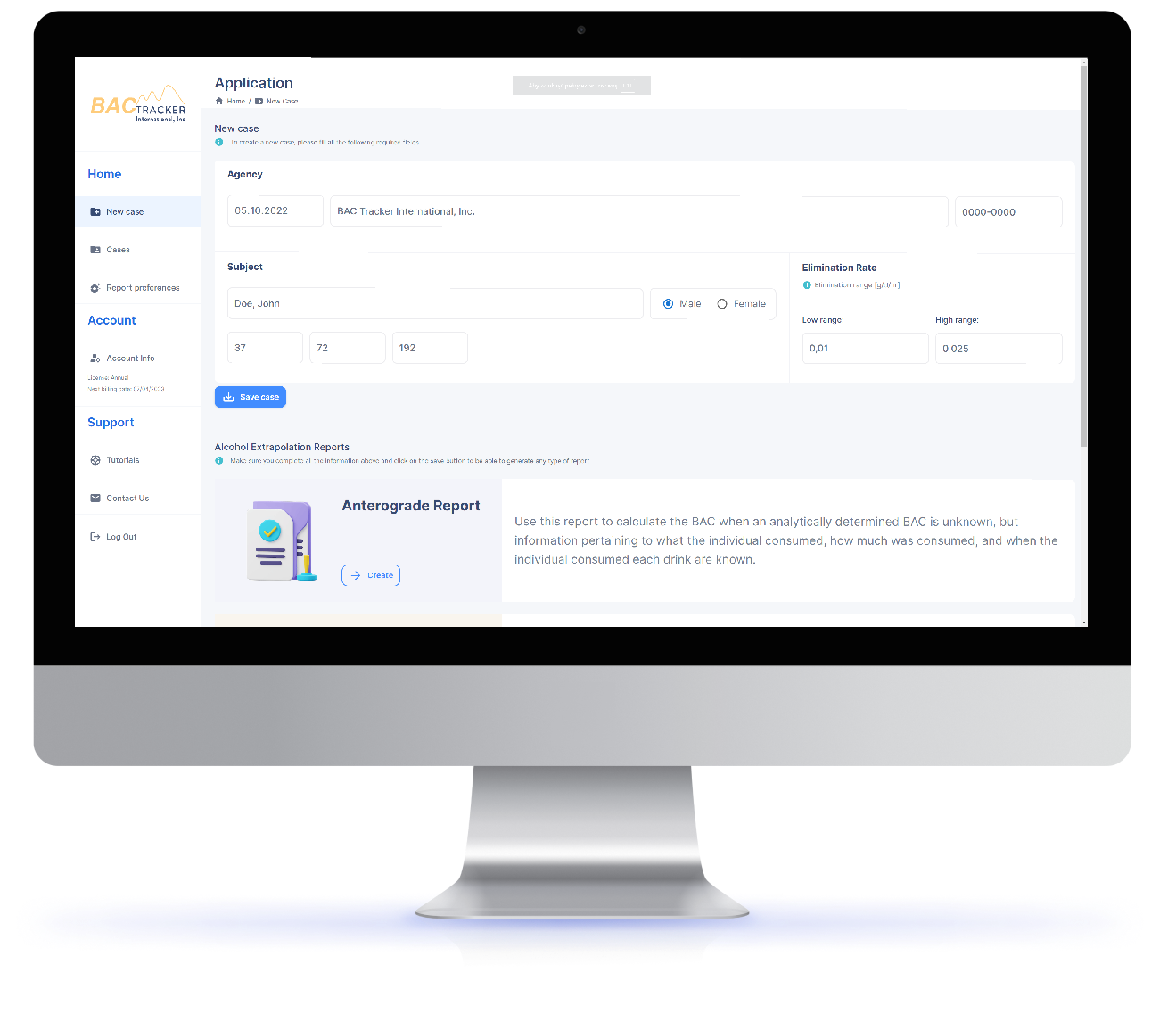
Minimal data input Simple user interface that anyone can use
Provides accurate, unbiased and comprehensive BAC results using published scientific methods
Your solution to forensic alcohol extrapolation casesTry it risk free, cancel anytime
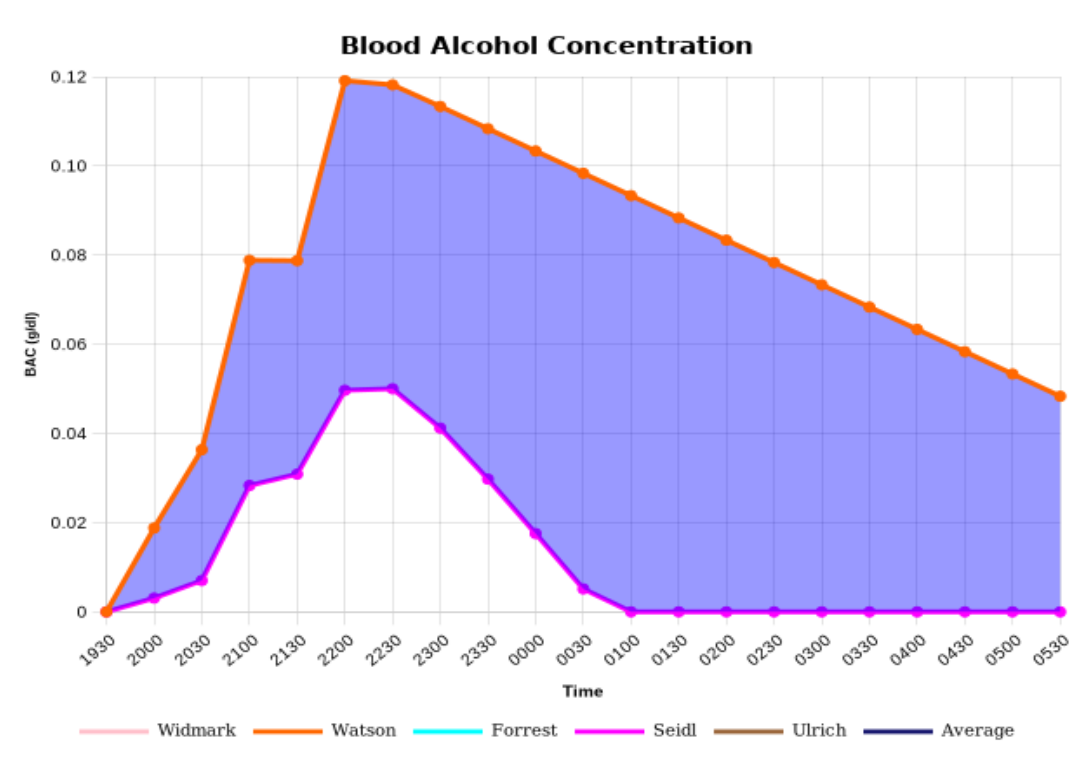
About the productOur software combines several published methods for calculating alcohol absorption, distribution, and elimination to provide an accurate, unbiased, and comprehensive BAC profile for any scenario.
With its simple user interface, anyone can use BAC Tracker to perform hundreds of combinations of complex calculations in a matter of minutes to generate various reports estimating the plausible ranges of alcohol metabolism and BAC results at any point in time for a given scenario.
Alcohol Extrapolation ReportsBAC Tracker software is your solution to forensic alcohol extrapolation cases. Developed through input by global leaders in the field, BAC Tracker combines several published methods for calculating alcohol absorption, distribution, and elimination to provide an accurate, unbiased, and comprehensive BAC profile for any scenario. BAC Tracker provides users with the ability to generate three different types of reports. In each type of report, BAC Tracker provides a bounded interval of plausible results based on scientifically peer reviewed and published methods to account for the intra- and inter-individual variations of alcohol metabolism in the population.
Three separate types of extrapolation reports (see below) for a total of up to 508 separate reports can be generated within seconds using BAC Tracker which are derived from every major published formulae accounting for volume distribution and calculated against every combination of absorption and elimination rates.
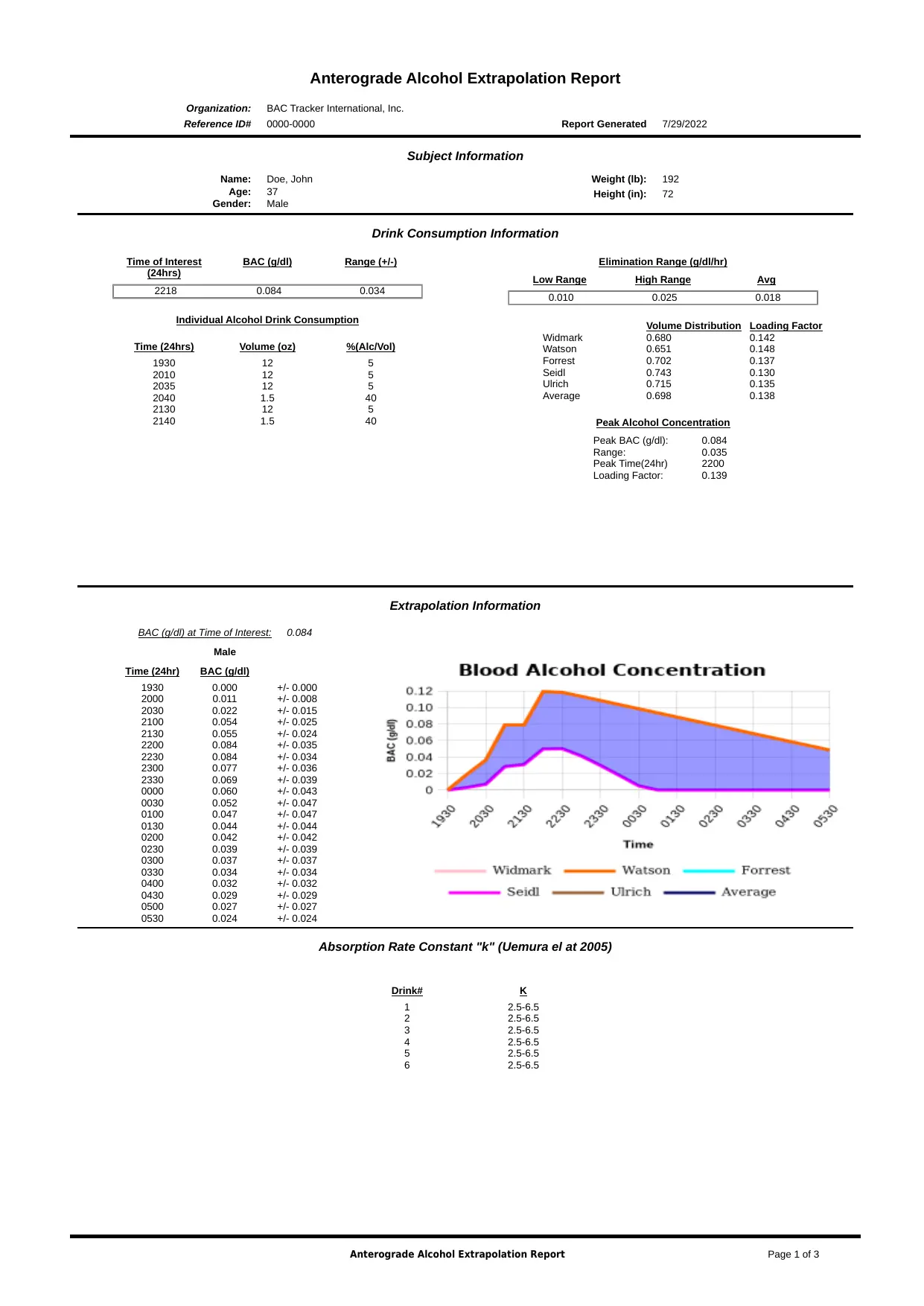
Anterograde Alcohol Extrapolation Report
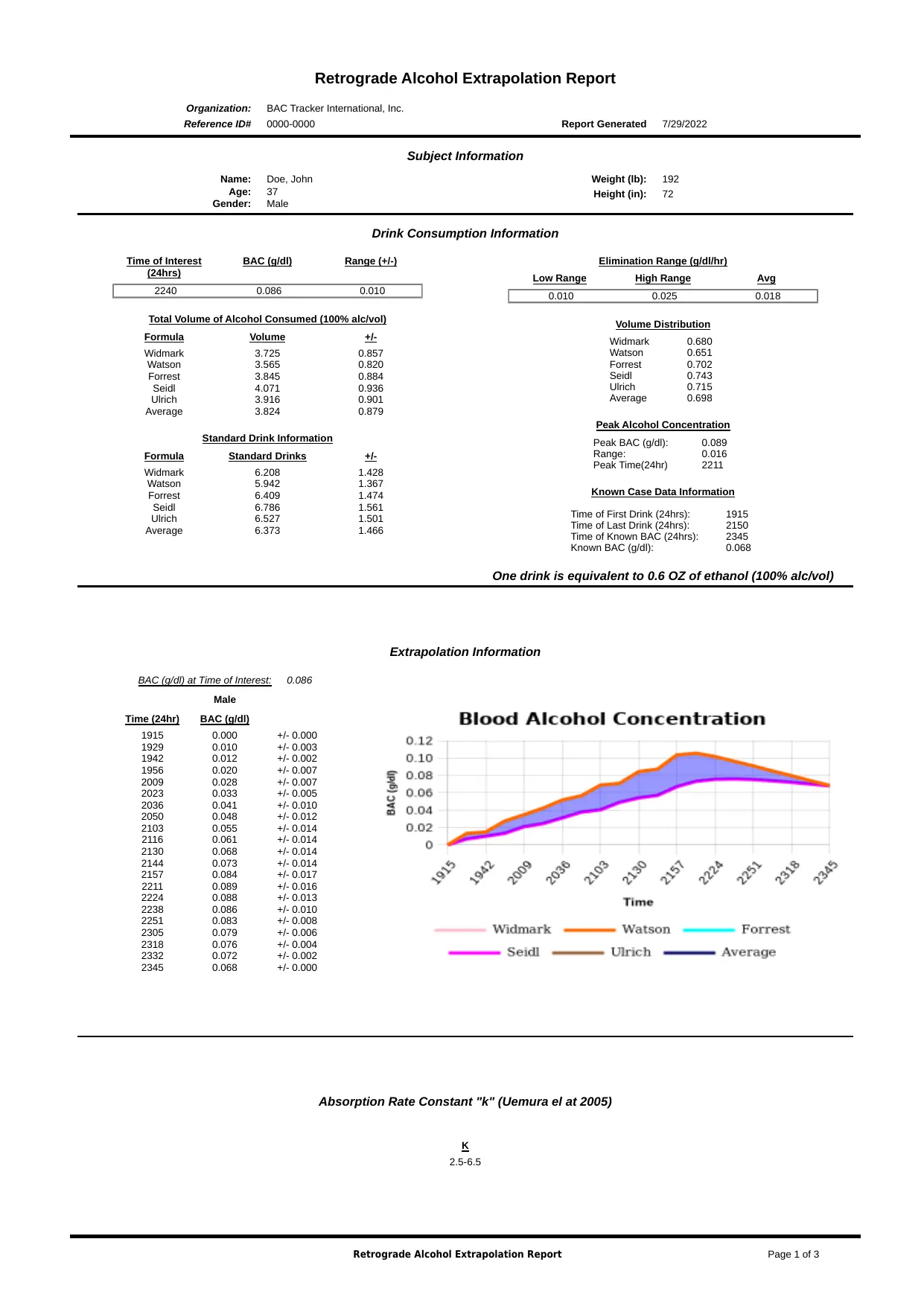
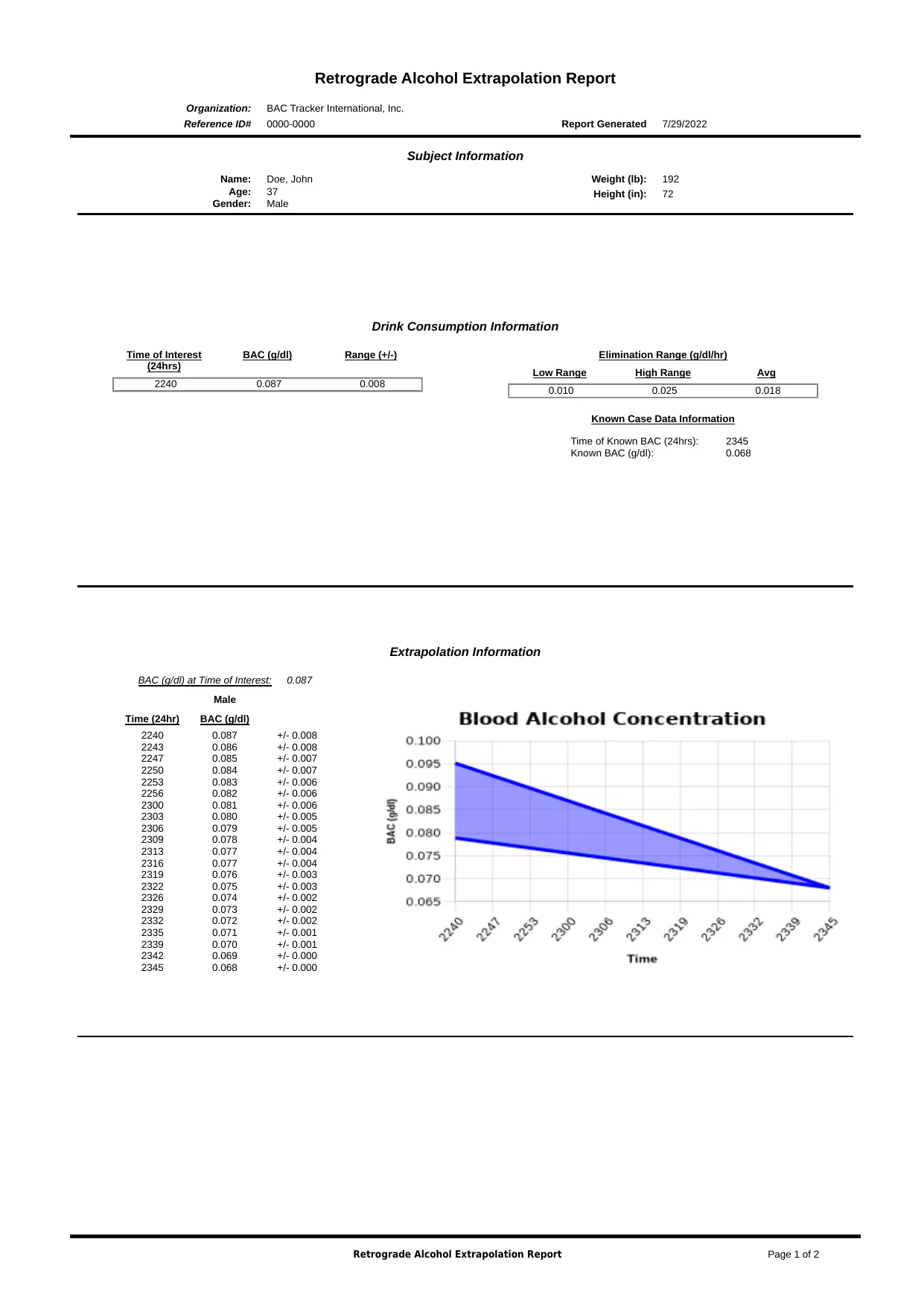
Retrograde Alcohol Extrapolation Report
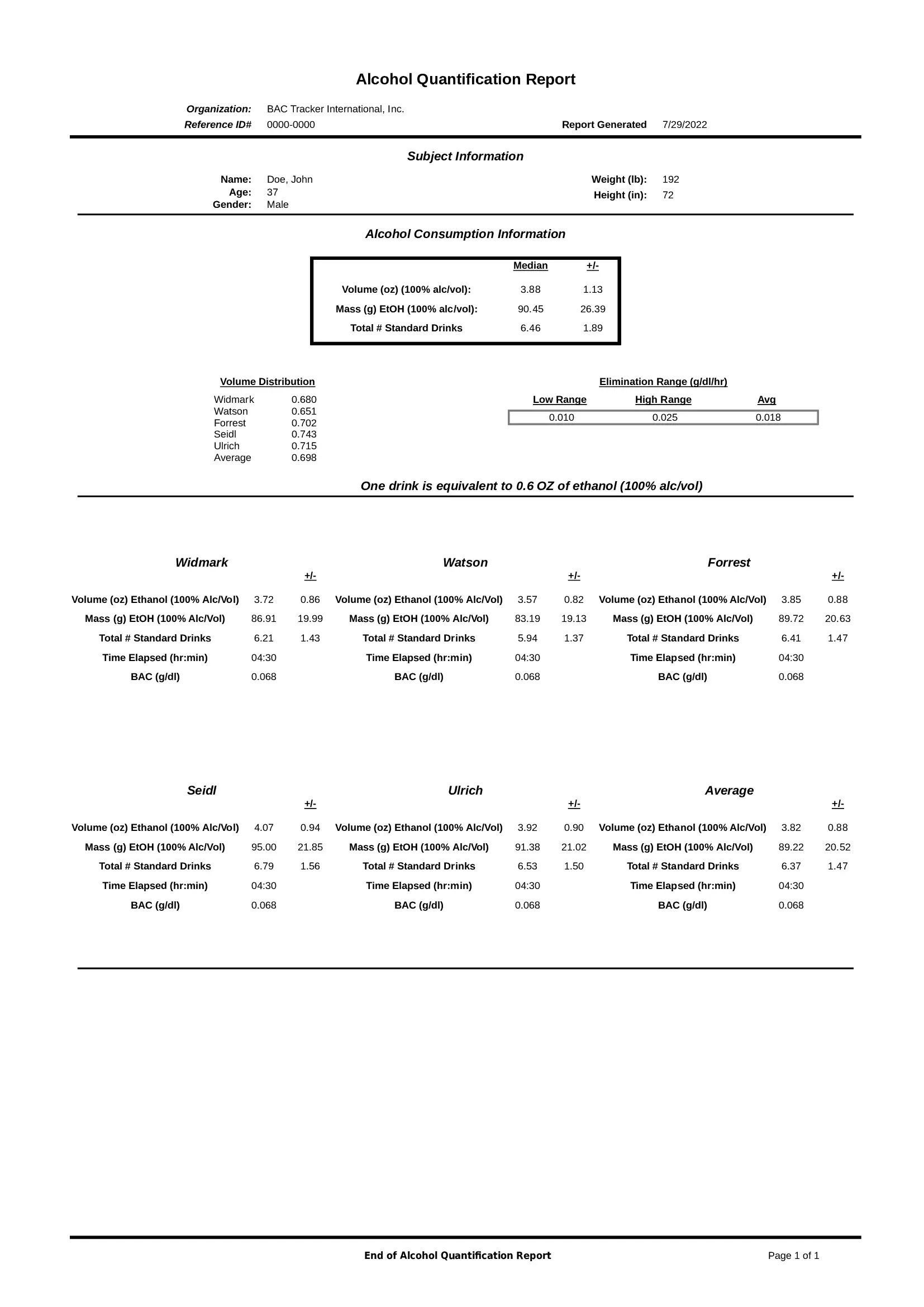
Alcohol Quantification Report
Anterograde Alcohol Extrapolation Report
This report provides a comprehensive, multi-point curve extrapolation of the entire drinking scenario when no analytically determined known BAC is available, but information pertaining to what the individual consumed and approximate times of consumption are known.
This type of report may generate up to 252 different reports using any combination of the six volume distribution formulae calculated with various combinations of absorption and elimination rates chosen by the user.
Retrograde Alcohol Extrapolation Report
TYPE IThis report provides a comprehensive, multi-point curve extrapolation of the entire drinking scenario when an analytically determined known BAC is available as well as approximate times of alcohol consumption (time of first drink and time of last drink), but information pertaining to what the individual consumed, how much the individual consumed, and exactly when the individual consumed each individual drink are unknown. This type of report may generate up to 252 different reports using any combination of the six volume distribution formulae calculated with various combinations of absorption and elimination rates chosen by the user.
TYPE IIThis report provides a multi-point extrapolation of the blood alcohol concentration when an analytically determined known BAC is available, but information pertaining to what the individual consumed, how much the individual consumed, and exactly when the individual consumed the alcohol are unknown. This type of report assumes alcohol absorption is complete and estimates the BAC by calculating the amount of alcohol metabolized between the Time of Interest and the Time of the Known BAC taking into account the uncertainty associated with alcohol elimination. Additionally, the software can take into account any uncertainty associated with the known BAC from QA/QC data to ensure all sources of uncertainty are accounted for in the extrapolation.
Alcohol Quantification Report
This report provides a comprehensive extrapolation of the amount of alcohol consumed by an individual in order to reach a particular BAC after a specified time lapse since the first drink of alcohol. This report quantifies the amount of alcohol consumed according to each of the six different volume distribution formulae and calculated using various rates of elimination chosen by the user thereby taking into account the variations associated with the volume distribution and elimination. Additionally, the software will take into account the uncertainty associated with the known BAC from QA/QC data to ensure all sources of uncertainty are accounted for in the extrapolation.
License OptionsWhether you need BAC Tracker on a routine basis or just for a single case, we have the license that will work for you. Each license allows complete access to BAC Tracker software functions and the ability to generate unlimited reports for the license duration. Sign up or log in with a valid email address to select the license that is right for you.
First-time users receive seven days included with their license to use BAC Tracker risk free. During the first week, a full refund will be provided if you are not completely satisfied. Our convenient automatic renewal process will ensure you have uninterrupted access to BAC Tracker. You can manage your billing information, cancel your automatic license renewal, or purchase a new license at any time directly within your account.